
Commodity Export
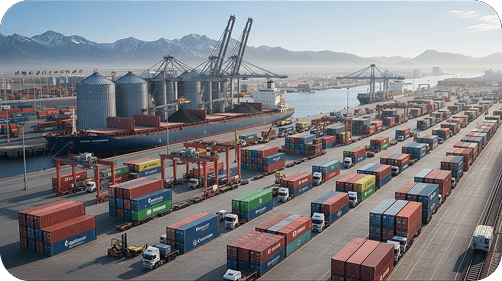
Timber and agricultural commodities sit at the intersection of trade compliance and biosecurity. The Timber Industry Development Division (TIDD) and the Forestry Commission of Ghana operate distinct but interlocking approval regimes, and missing a step on either side will park a shipment indefinitely.
Our export desk treats TIDD and Forestry Commission approvals as the first dependency on the timeline — before sea freight booking, before stuffing schedules, before any commercial commitment to a buyer abroad. The reason is simple: the permits dictate what may legally leave the country, in what volume, and in what form.
Species declaration is the most common point of failure. The species, grade, and dimensions on the export permit must match precisely the commercial invoice and packing list. Variances — even small ones rooted in colloquial naming — trigger holds at the port that no commercial pressure can release.
Phytosanitary certification, moisture content reports, and treatment records sit alongside the export permit. For overseas buyers in Europe and Asia, these are not optional; they are the basis on which the buyer's local customs accepts the cargo. We coordinate stuffing schedules around fumigation and treatment cycles to keep the paperwork synchronized with the physical cargo.
Once the permit pack is complete, the port-side workflow is largely mechanical: book the vessel, stuff the container under supervision, lodge the export declaration on GCNet, and dispatch the original documents. The work is in the front-loading. Done well, the back end is uneventful — which is exactly what an export operation should be.
Talk to our operations desk about your next shipment.